
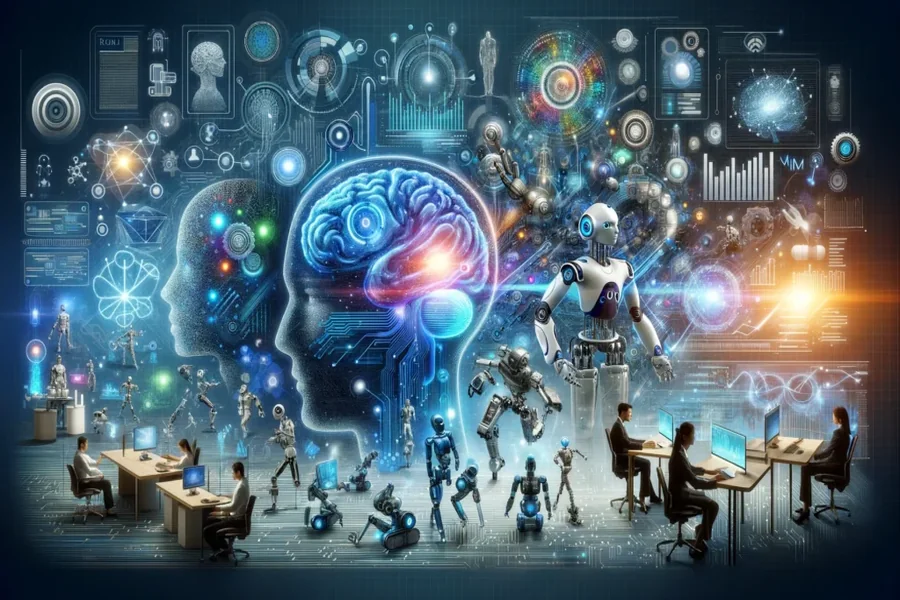
Artificial Intelligence Technology, commonly known as Techsslaash, is transforming how we live, work, and interact with the world around us. Over the past few decades, what once seemed like science fiction has now become a fundamental part of our everyday lives, powering everything from voice assistants and smart recommendations to complex industrial automation and medical diagnostics. This article delves into the meaning of AI Tec, its core components, applications across industries, benefits, challenges, and the exciting future it promises.
What is AI Tec?
AI Tec refers to the collection of technologies and systems that enable machines to mimic human intelligence. It involves programming computers and machines to perform tasks that typically require human cognition, such as understanding language, recognizing images, learning from data, solving problems, and making decisions.
At its core, AI Tec combines various fields, including:
-
Machine Learning (ML): Algorithms that allow systems to learn and improve from experience without being explicitly programmed.
-
Deep Learning: A subset of ML that uses neural networks to analyze large datasets for tasks like speech recognition and image classification.
-
Natural Language Processing (NLP): Techniques that help machines understand and interact using human language.
-
Computer Vision: Enables machines to interpret and analyze visual information like photos or videos.
-
Robotics: The integration of AI with physical devices to automate tasks requiring perception and movement.
The Rise of AI Tec: A Historical Perspective
Artificial Intelligence has roots dating back to the 1950s, but its journey to mainstream adoption accelerated dramatically with advances in computational power, data availability, and algorithmic innovation. The availability of big data, cloud computing, and affordable sensors has fueled rapid developments.
Today, Techsslash is embedded in many tools and platforms that billions use daily—from smartphones and smart homes to autonomous vehicles and financial systems.
Key Applications of AI Tec
1. Healthcare
AI Tec is revolutionizing healthcare by:
-
Diagnosing diseases: AI-powered systems analyze medical images to detect cancers, fractures, or other abnormalities earlier and more accurately.
-
Personalized treatment: AI models assess patient data to tailor medication and therapy plans.
-
Drug discovery: Accelerating the identification of potential drug candidates by analyzing complex chemical data.
-
Robotic surgery: Assisting surgeons with precision movements for minimally invasive operations.
-
Virtual health assistants: Offering 24/7 patient monitoring and consultation.
2. Finance
In the financial sector, AI Tec enhances:
-
Fraud detection: Monitoring transactions to flag suspicious activities instantly.
-
Algorithmic trading: Making rapid investment decisions based on market data.
-
Risk management: Predicting loan defaults and creditworthiness.
-
Customer service: AI chatbots provide seamless support around the clock.
-
Personalized financial advice: Tailoring recommendations based on user behavior.
3. Retail and E-commerce
Retailers leverage AI Tec for:
-
Product recommendations: Personalized suggestions based on browsing and purchase history.
-
Inventory management: Predictive analytics optimize stock levels.
-
Customer service: Virtual assistants handle queries and complaints.
-
Visual search: Customers can search for products using images.
-
Dynamic pricing: Adjusting prices in real-time based on demand.
4. Transportation
AI Tec powers innovations such as:
-
Autonomous vehicles: Self-driving cars use AI to navigate and make decisions.
-
Traffic management: AI optimizes traffic flows and reduces congestion.
-
Logistics: Route optimization for faster, cost-effective deliveries.
-
Predictive maintenance: Anticipating vehicle failures before they occur.
5. Education
AI Tec enhances education by:
-
Personalized learning: Adapting content and pacing to individual students.
-
Automated grading: Saving educators time on assessments.
-
Virtual tutoring: Offering on-demand help.
-
Analyzing student performance: Identifying areas needing improvement.
6. Manufacturing
Smart factories utilize AI Tec to:
-
Automate repetitive tasks: Using robots to improve efficiency.
-
Quality control: Detecting defects with computer vision.
-
Predictive maintenance: Reducing downtime by forecasting equipment issues.
-
Supply chain optimization: Enhancing logistics and inventory management.
Benefits of AI Tec
The widespread adoption of AI Tec delivers multiple advantages:
-
Increased efficiency: Automating mundane and complex tasks saves time.
-
Enhanced accuracy: Reducing human errors with precise calculations and analysis.
-
Cost savings: Lower operational expenses through automation and optimization.
-
Better decision-making: Real-time data analysis enables smarter choices.
-
Improved customer experiences: Personalized services boost satisfaction.
-
Innovation acceleration: Opening new frontiers in science, medicine, and engineering.
Challenges and Ethical Considerations
Despite its potential, AI Tec presents several challenges:
-
Job displacement: Automation threatens roles reliant on repetitive work.
-
Data privacy: AI systems often require vast personal data, risking misuse.
-
Bias and fairness: AI can perpetuate existing societal biases if trained on flawed data.
-
Transparency: Many AI algorithms operate as “black boxes,” making their decisions hard to interpret.
-
Security risks: AI-powered cyberattacks and misinformation campaigns can cause harm.
-
Regulatory gaps: Policymakers struggle to keep pace with rapid AI advancements.
Addressing these issues demands a responsible approach that balances innovation with ethics, transparency, and inclusivity.
The Future of AI Tec
Looking ahead, AI Tec will become even more integral to society’s progress:
-
Generative AI: Creating art, music, and writing with minimal human input.
-
Explainable AI: Making AI decisions understandable to foster trust.
-
AI in sustainability: Helping combat climate change through smart resource management.
-
Human-AI collaboration: Augmenting human capabilities instead of replacing them.
-
Artificial General Intelligence (AGI): Pursuing machines that can perform any intellectual task a human can do—still a long-term goal.
As AI Tec evolves, ongoing research, innovation, and governance will shape how it impacts our lives.
How to Prepare for the AI Tec Era
Whether you are an individual or an organization, preparing for AI Tec means:
-
Learning AI fundamentals: Understand how AI works and its applications.
-
Upskilling: Develop skills in data literacy, machine learning, and critical thinking.
-
Adopting AI tools: Integrate AI solutions into daily workflows.
-
Promoting ethical AI: Advocate for fairness, transparency, and accountability.
-
Staying adaptable: Embrace change and continuous learning.
Conclusion
AI Tec stands at the forefront of technological innovation, driving efficiencies and creating new possibilities across every industry. While challenges remain, the opportunities for positive impact are immense. By fostering ethical development and responsible use, society can harness AI Tec to build a smarter, more equitable, and sustainable future.
The age of AI Tec is here. It’s transforming the way we live, work, and dream—offering us the tools to solve today’s challenges and imagine tomorrow’s world.